Posts Tagged ‘Excalibur’

VTPR in Brittany, France


VTPR in Britany by PLP35

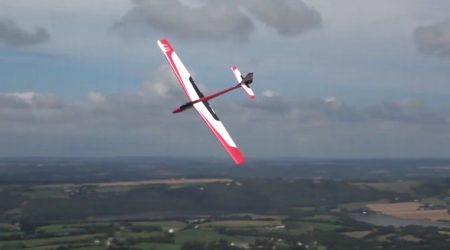
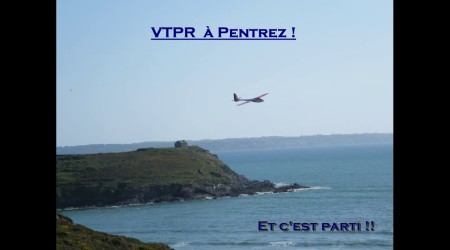
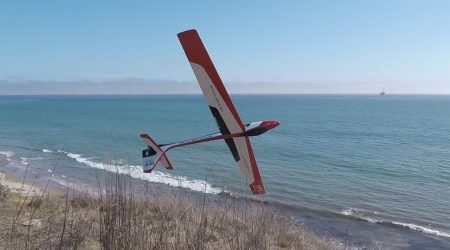
Really cool new video of Eric Poulain and Rémi Le Besque flying at the beach in Brittany, France! Great to see new stuff from these two masters of French VTPR!! :)

Hot new VTPR action with Eric and Rémi in Bretagne!


Vol de pente en Bretagne by PLP35

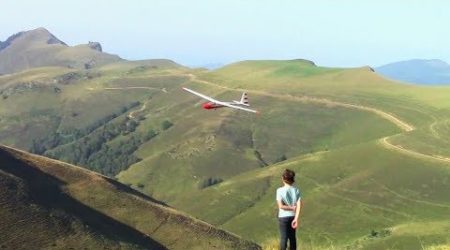
A super cool new VTPR video from Brittany, featuring Eric Poulain and Rémi Le Besque flying their Excaliburs at the classic Breton sites, Ménez-Hom and Lestrevet. Super clean flying as usual, love these guys – they are huge inspirations for all of us!! :)

Rémi Le Besque and Eric Poulain tearing it up in Britanny!!

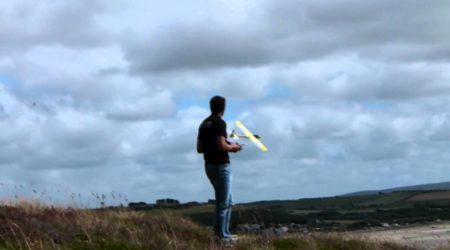
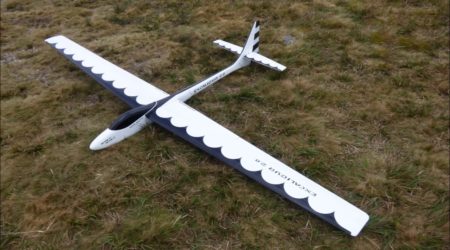
Wow, what a bunch of great French aerobatics videos coming out lately! Here are FOUR new videos showing the inimitable Rémi Le Besque and Eric Poulain flying in Britanny at the famous Ménez-Hom and Lestrevet slopes. And of course the glider they are flying is the Excalibur 2, one of the most beloved French VTPR designs! Enjoy!!

ExCali VTPR Glider Project

ExCali VTPR Glider #1 at Ellwood Mesa from surfimp on Vimeo.

ExCali build thread on RCGroups

Five years ago on March 21st, 2007, I launched this site with the goal of making it the best source of R/C slope and glider aerobatics content in the English language. Today the site features great slope aerobatics content from all over the world and helps bring us together so we can enjoy all that is going on. And there is quite a lot these days!!

So, in celebration, I’m pleased to announce the latest collaboration between Swiss Peter and myself. We are undertaking our most ambitious project yet, a California reinterpretation of the world famous Excalibur VTPR glider from the mecca of voltige tres pres du relief: Bretagne, France.

Our glider will be named ExCali, which in Latin means From Cali and of course also pays tribute to the name of the original Excalibur designed by Eric Poulain.

We have been collaborating closely with Rémi Le Besque, the pilot of the red Excalibur 2 from the famous Ménez-Hom 2005 video. Rémi is following in the long tradition of really cool French aerobatics pilots in generously sharing his time and enthusiasm with us as we undertake this project. Merci beaucoup, Rémi! :)

The ultimate objective is a 2.5m glider with molded fuselage and wood sheeted wings, the time honored construction technique of large and durable slope gliders worldwide.

Span: 2.5m
Length: 1.48m
Weight: ~1700g
Airfoils: TP42 – 9% (root), TP29 – 9% (tip)
Madslide-style stabilizer capable of 180* rotation

Printable PDF of the ExCali fuselage shape: ExCali ZIP file (10MB). Costs about $5 to print out at your local Kinko’s or equivalent.

The design will encompass best-of-breed features of the Excalibur 1 & 2, the Madslide, the Voltij, the Wasabi and the Le Fish. We intend it to be the most cutting edge VTPR glider produced up to this point, synthesizing all that has been learned in recent years about VTPR and Madflight.

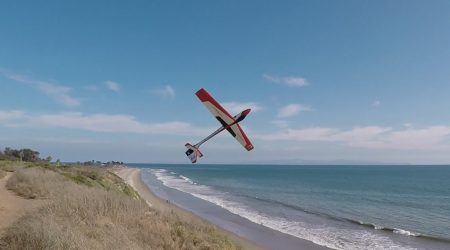
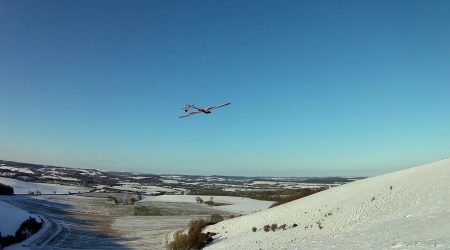
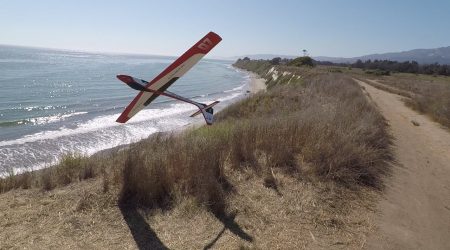
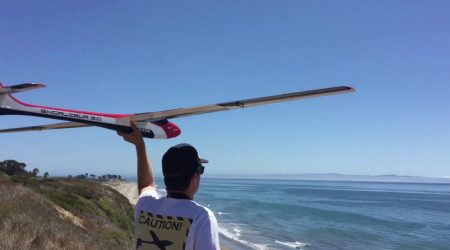
We are first building EPP prototypes to test ideas and then, when we are satisfied, we will proceed with mold production. As you can see above, the first prototype, built by Swiss Peter, has been completed and flown. It’s a lot of fun! We have more in the works :)

Next summer, August 2013, my family and I will travel to Finistère, Bretagne where we will spend a nice holiday on the coast. There I will introduce the ExCali to the locals at Ménez-Hom and fly it alongside the French pilots who have been such an important inspiration to us.

Steve “Surfimp” Lange

Treasure trove of French VTPR photos courtesy Jivaro Models

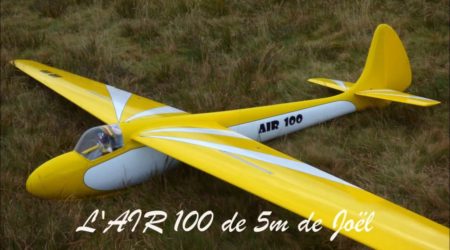
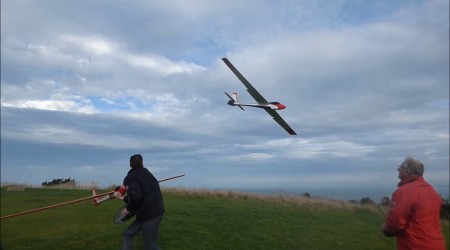
Laurent Berlivet of Jivaro-Models was kind enough to send over this amazing collection of photos. Many have been featured previously in French hobby magazines. There’s a wide array of notable VTPR gliders and sites, everything from the Air-100 at the beach in Brittany, to Excaliburs at Ménez-Hom, to Saltos in Andorra, and a whole lot more. Plus a handful of classic BPLR Giant Zlin photos – those never get old!!

Enjoy, and big thanks to Laurent for sharing these!! :)

The original Excalibur article from Looping magazine

Excalibur article from Looping Magazine

Rémi Le Besque, one of the starring pilots from the famous Ménez-Hom 2005 VTPR video, has been kind enough to share with me scans of the original article, written by Eric Poulain, about the Excalibur VTPR glider that appeared years ago in the now-defunct Looping magazine from France. What a cool photoshoot they did, complete with costumes! And what an amazing glider… it still sets the standard by which all other VTPR gliders are judged. The newer Excalibur 2 or “Exca 2″ is even better!

You can see the scans below, read a rough translation here, or download a PDF of the article here: Excalibur Article from Looping Magazine

And here is that classic video… I don’t get tired of watching these masters at work! :)

Ménez-Hom 2005 from surfimp on Vimeo.


EDIT: March 13, 2012:
Here is a very rough translation of the most pertinent parts of the article. Enjoy!


by Eric Poulain

After many years of so-called traditional acrobatics, the addicts of Menez including myself, felt the need to practice their passion in a way somewhat unbridled. In other words: let off steam in some academic exercise that a columnist has called “voltige tres pres du relief” (VTPR).

Initially, our gliders were largely inspired by the great Quartz of Francois Cahour. We then had the desire to create machines better suited to our style of flying: thus were born the Sonic of David Luce and my Excalibur.

As you probably already noticed, performance gliders have a curious tendency to look alike: same shape, same profile, or almost. This reminds me of a certain Dolly aging faster than his shadow [Ed.??]. Every summer, I offered to try and sort out a number of models that (daring) friends entrusted me with their first contact with air; this has caused me to shake a little, to see.

Excalibur is the synthesis of these multiple tests. This is the feeling that the shapes of the time were defined: no aggressive lines, good side surface, rounded, nice look (Thierry finds himself an air of Donald. To each his references!) Anyway, this is a mutant.

Has remained define [with] the pen which as everyone knows an essential character in our activity: simple trapeze to facilitate construction, simple though effective ailerons (not full-span, not quadro, not high tech), no complicated wingtip shapes.

In terms of construction, I research the simplicity and cost reduced to its simplest expression. Look no carbon, nor kevlar, balsa at most, fiberglass, a little resin, PU glue and a few drops of plywood, the result to be light and easily repairable, to take a hit without stress.

To tell you about Excalibur, I chose to focus more particularly on the flight. This phase is the culmination of various cogitations and the inevitable construction. The area of application of this glider being large, we first discuss the flight called “traditional” (nothing to do with our bagpipes) and finally VTPR, the settings of the model being identical in both configurations.

Excalibur, as you guessed, is an aerobatics glider. Contrary to what is often observed (free advertising for others) you can make it fly in light winds. I hear the laughter already … aerobatics? Little wind? One thing is clear: to make progress in this discipline, we must fly often, so [the glider must be] for all conditions. It is useless to have a superb model of plastoc that costs over 3500 Francs (plastoc of the poor!) which stays on the ground for lack of sufficient dynamic range while the cronies are turning the crepe in the midst of handlaunch gliders [Ed.: I have no idea what this means, but the gist of it seems to be that it's better to have something that will fly in light lift rather than not fly at all]

Excalibur is piloted using three axes of control, which means that the rudder is not an accessory that can be ignored for aerobatics. Turns should be coordinated under pain of not being able to appreciate its amazing capabilities of scraper [Ed.: scraper = floater]

Despite its low wing loading (necessary for VTPR), the Excalibur is not afraid of the big time and is very penetrating. The profiles used are probably not strangers to this undeniable advantage.

With a bit of zef, aerobatics classic comes together with ease without a playful monster is absolutely necessary. May nothing prevents pushing like crazy on the handle, each has its pleasures!

Loops go straight fingers in the nose (this is only a phrase, please keep holding onto the handles!), including the most beautiful who turn parallel to the slope. Slight gain airspeed, pull, and we must not forget two things: correct a drift [with rudder] at the top depending on the wind and release the handle [elevator] so as not to tighten the loop. For what are the inverted loops, no problem either.

For barrels [rolls], a low acceleration enough to turn them without having to do too much correction. One can nevertheless execute them at the rated speed of the glider, but in this case, we must know how to play the drift [rudder] and depth [elevator] depending on the position of the device [glider].

The Excalibur restores well and its rudder is particularly effective permitting the chaining of reversals and double reversals in small spaces. Adjustments and plan, inverted flight requires little correction has depth and can even scratch in this position, remembering that in this case, the rudder is always necessary and it is reversed.

I believe I read that some think that the knife-edge of significant duration is a utopia in a glider. To have succeeded (and I’m not the only, does not it Biloune and others) with different models, I suggest you try it with the Excalibur. A tip: it is the only figure that requires a substantial speed gain. We push to the playful, is pulled slightly, it sends the ailerons to the switch to the bracket, then you put a background rudder (note: in the right direction, try, you will find) [Ed.: Yeah, the hard way! LOL :p ]. The elevator is then rudder and used according to the wind. When it goes well, it is possible to travel amazing distances.

All chained figures (vertical eight, Savoy knot, four leaf clover) are feasible without major difficulty. Despite this strong potential, the Excalibur is accessible to any pilot skilled in three axis flying. Particularly nice, the Excalibur is rarely in trouble. At large angles and no angle of attack, the stall comes late, with a moderate swing perfectly and catchability.

Its speed range is a surprising extent. Can bomber [Ed.: go fast] or be asked to bring gently in the palm of your hand (interesting if one does not scratch the paint of the fuse), without any risk.

For landing, other than in the hand, I do not use A.F. [no idea what this is] as a glider extends max light wind, better meet the ailerons (45*) like Lucien and Miametons. This parachute the Excalibur.

Before going further, it seems important to mention that the VTPR is not an exercise in kamikaze, practice fades, with no respect or space or people. The level of risk, excluding radio failure is virtually zero as long as certain rules are followed:

1) Never exceed the level of control: one must have a good mastery of classic aerobatics to try the VTPR.
2) Always announce [the glider's] passages and figures.
3) Figures are not made behind your companions
4) VTPR figures are made at the lowest possible speed

The simplest is the classic touch and go: you come in for a landing as gently, you stroke the grass (the sand or water for some …) with the belly of the time and one starts toward the hole. Attention should be able to hear the slight crunch that attests to the success of the maneuver. The trick is to appreciate the speed required for landing before the kiss off again. An alternative is to graze the grass (for example) with a wingtip or with the top of the rudder, implying in the latter case that we present on her back.

And nothing is easier to get [Excalibur] on his back, than a half-snap positive. It arrives flat and has a height compatible with the half-scale (not below 1.30 m for the Excalibur!). In the case of a half-snap to the right, send a bottom depth with pitch, and rudder and ailerons to the right (to help). The rotation is abrupt. To stop once on the back, releasing it while it grows. The accuracy of the judgment depends on the lightness of the wings. The negative half triggered a right to recover a flat, is a similar way: a bottom has bitten deep, drift to the left and ailerons to the right. Moreover, the half-triggered negative saving is a maneuver to get out of a delicate position at low altitude. Attention, it is recommended to train beforehand with water under the keel, except [for those who] love repair.

Series of half-snaps on the spot: wind speed must be greater than or equal to the rated speed of the glider, the figure tackles against the hole, a nominal height of the glider, the figure tackles against the hole, has height eye. It excecute successively triggered a half-positive and half negative snap and start again until the altitude is too low … We must note that at each full turn, the glider tends to go down and ‘taking it well, it is also a solution to land.

The reversals are, of course, part of the panoply of VTPRiste.
All combinations are possible.
For example:
- Depart back, slight altitude gain
- Small back reversal at low speed
- Touch and go rudder at the output of the reversal
- Half-snap negative
- Touch and go is flat
- And if possible, half-snaps positive …
- Landing in the hands

No, you are not dreaming and this is not pure fiction: with a little practice and sometimes a few tubes of glue, we get the desired result.

How to build Excalibur 2 wings

There’s a great page on the Fly35 website showing how to build wings for an Excalibur 2. If you were ever wondering how Breton VTPR models could be built so light, this should help you get an idea! Definitely worth a browse… check it out :)

Ménez-Hom été 2010


Ménez-Hom été 2010 by PLP35

A fantastic video submitted by our friend Erwan Laurans (star of Pierre Rondel’s recent Sonic video) of some great flying at the mecca of VTPR, Ménez-Hom in Bretagne :)

Excalibur VTPR at L’Alpe d’Huez

Sent to me by Jean-Marc Zuliani… check out his other great videos on YouTube!

Video: Voltij vs. Exca2

Another great video from Arnaud Roussin aka “F-Jones,” this time featuring some awesome Voltij and Exca2 flying. Which one is better?? Who cares, the flying from both planes is fantastic! :)