Posts Tagged ‘Madflight’

New article: Patterns and Flow – Improvisation in Slope Aerobatics

Inspired by a great question I received from rockyabp in the How to build a Swiss Fish thread, I wrote an article addressing the concepts of “pattern” and “flow” in the context of improvisation and choreography in slope aerobatics. Slope aerobatics involves both, and telling the two things apart is not always so easy – even for the pilot. It’s an interesting subject – check out the article here:

Black Hills Reprise

Black Hills Reprise from surfimp on Vimeo.

My latest… I’ve got multiflips on lock thanks to finally running a pull-pull elevator setup (copied directly from BPLR’s Madslide). Wind was about 12-14mph, allowing some fun bowl flying. Hope you enjoy :)

Smooth & Casual

Smooth & Casual from surfimp on Vimeo.

Another video from my session the other day. This one features longer cuts set to jazz music by the Miles Davis All Stars. I attempt to create chained combinations of figures that blend traditional aerobatics, low VTPR passes, and Madflight flips.

My Le Fish weighs 17oz (480g) and the wind was straight-in, about 10-12mph (~5m/s).

Hope you enjoy! :)

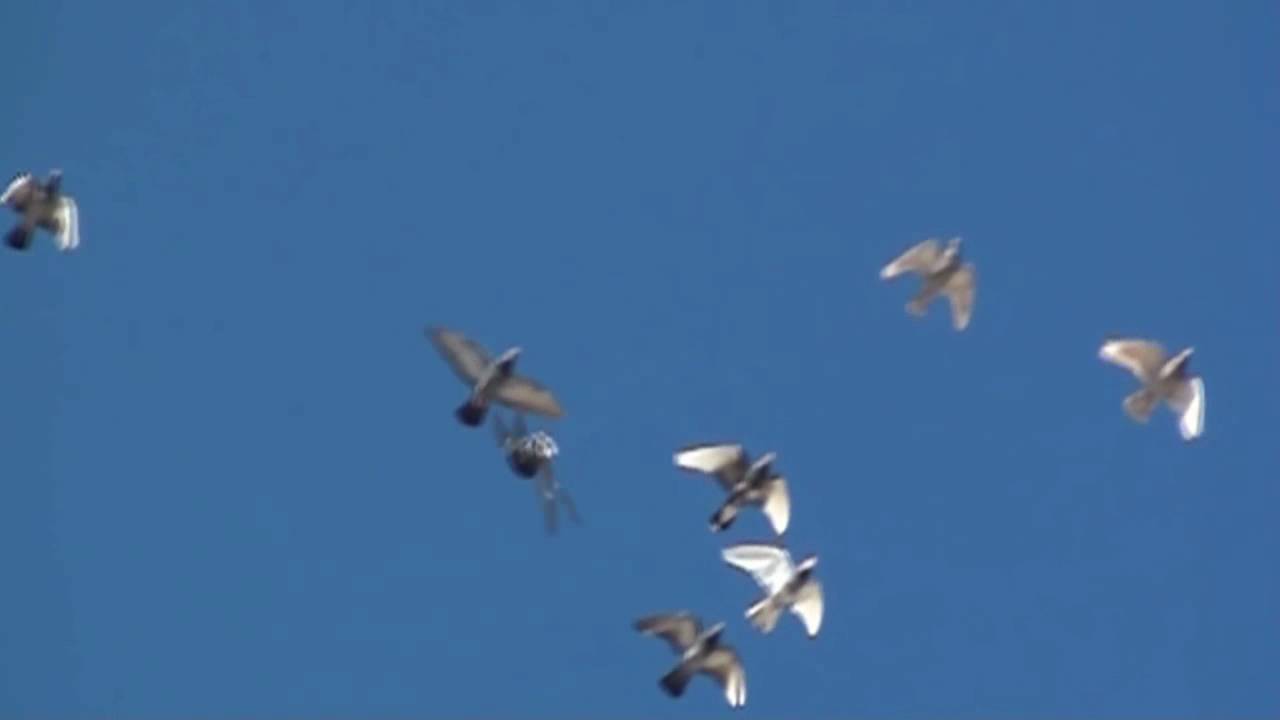
Birmingham Rollers: the Madflight Experts of the Avian World

Big thanks to Ian “Daemon” Frechette for this super cool video!! How awesome is this? :)

Madcam in action!

I really like the looks of this! How exciting!!! I plan to use one of these on my forthcoming ExCali prototype. Should be very, very cool!!

See the first post about this setup here.

The Edge by Future Slope Designs

Flying the Edge from Paige Anderson on Vimeo.

A great video of Paige Anderson’s newest glider for VTPR and voltige totale, the Edge. This one has a full flying “Madstab” – style elevator and is capable of beautiful multiflips as shown in the video here. It also does a really nice flatspin and overall seems to be a smooth and graceful flyer. Love it!!

Will be available soon from Future Slope Designs. Great job, Paige! Just what we’ve come to expect from you :)

New! Twincam elliptical Madstab pulleys

Now this is exciting! Vincent “Prop-er” of RCPlans.nl has come up with a really innovative solution to the biggest problem facing the increasingly popular “Madstab” 180° rotation full flying elevator: resolution.

The typical Madstab uses a pushrod, pull-pull or pulley arrangement to translate 60° of servo movement into 180°+ of elevator travel. This “crazy” amount of elevator travel is absolutely mandatory for us to be able to successfully pull off tight Madflight flips in the style of Benoit Paysant-Le Roux.

The problem is that we give up a significant amount of elevator resolution for normal flight because of the mechanics of the system. It is a double edged sword and even though dual rates and exponential can help tame it, you still wind up with a fairly imprecise elevator response, making the planes very pitchy in normal flight and harder to fly smoothly.

Hopefully Vincent’s solution, incoporating elliptical pulleys, is the answer to our needs! Based on what I’m seeing above, we should be able to get the majority of exponential required from the mechanical arrangement of the pulleys. This will allow a significantly increased amount of elevator precision around “center stick”, where the vast majority of flying is done, while still giving us a huge rotation when desired.

Vincent has provided the following details:

Relative rotation

servo stab
10°
20° 10°
30° 25°
40° 40°
50° 75°
55° 100°

Notes:

  • Servo cam: Ellipse height 20mm, ellipse width 4mm. (ellipse ratio 0.2)
  • Stab cam: Ellipse height 10mm, ellipse width 3mm. (ellipse ratio 0.3)
  • Both cams hinged right in the center
  • The cam on the tail needs a rounded bottom, as shown in the pics.

I'm very excited by these prospects and can't wait to test them! If it works out, it will mark a very significant turning point, and make this kind of flying even more accessible.

KONA180° VTPR aerobatics glider

Benny Wachtelaer of Belgium has created a really cool new wood fuselage with sheeted wing 1.8m VTPR glider called the KONA 180°. It has a Madslide-style 180° rotating elevator to allow Madflight should the pilot desire. Looks really nice!

He drew the entire design in CAD to create files for laser cutting and has just a few days ago maidened the plane. No video yet but I’m sure we’ll have some soon! Depending on how it goes, this may materialize into a lasercut kit at some point – that would be super cool!

Great job Benny – this glider has fantastic lines, sort of a blend of Wasabi, Minitoons and Le Fish. I like it a lot! :)

Original Madslide article from Looping Magazine

Another great set of scans from Laurent Berlivet of Jivaro Models, this time about one of my very favorite 3D / VTPR gliders, the Madslide by Benoit Paysant-Le Roux (known as BPLR for short). This article appeared in Looping back in the August/September 2000 issue and, when read, still inspires a passionate interest in the design today.

Back when our merry band of aerobatic enthusiasts on RCGroups was trying to sort out Madflight in 2008, BPLR was kind enough to share some very timely Madflight tips with us. Thanks to his timely intervention, and confirmed by our own experiments, the “secret” to Madflight is having at least 180* total rotation on the horizontal stabilizer. Then the flips come fast and furious! :)

Big thanks to Laurent for again sharing such a classic article with us!

Note that plans for the Madslide in both 1.5m and 2.3m size are available for free on Laurent’s website: Madslide plans

Madslide 3D slope aerobatics with Benoit Paysant-Le Roux (BPLR) from surfimp on Vimeo.

The MadSagitta

MadSagitta from Phil Taylor on Vimeo.

This is a classic and important video. Back in 2008, Phil was the first to take on the challenge of trying to achieve Madflight filps in the style demonstrated by BPLR with the Madslide. He took his existing Sagitta and built a new all moving tail for it, documenting the entire experience in his Crazy AMT for Aerobatics thread on RCGroups. He suffered a lot of challenges along the way, but the thread attacted a lot of attention – including some timely assistance from BPLR himself – and in the end, his efforts paid dividends for all of us. Today we have a much better understanding of the design requirements for Madflight and it is entirely thanks to Phil’s efforts here.